

Quick Summary
Frozen shoulder causes pain, stiffness, and reduced mobility in the shoulder joint—often lasting months or even years. Early symptoms like difficulty reaching, dressing, or sleeping due to shoulder pain often go ignored.
At Evolution Medical Care, we offer science-based natural therapies to manage frozen shoulder, including:
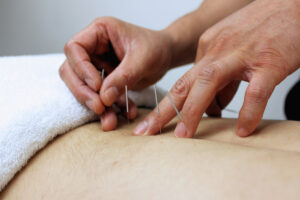
- Acupuncture to reduce inflammation and improve blood flow
- Herbal medicine to support immune and hormonal balance
- Remedial massage and heat therapy to ease tension and improve circulation
- Targeted rehabilitation exercises to restore mobility safely
- Nutritional support to reduce inflammation and aid healing
Most people recover without surgery—especially with early, consistent treatment.
Book online or call (02) 4709 6727 to start your recovery today.
When Simple Tasks Become a Struggle
You reach up to grab a coffee mug and a sharp pain shoots through your shoulder. Putting on a shirt feels like wrestling with your own arm. Sleep is broken by a dull ache that won’t quit. These seemingly small frustrations are often the first signs of something bigger: frozen shoulder, or adhesive capsulitis.
At first, you might dismiss the symptoms—“I must’ve slept funny” or “It’s just a bit stiff.” But over time, the pain intensifies, and the joint becomes increasingly immobile. Tasks that once felt automatic—reaching, lifting, dressing—start to require awkward compensations or become impossible altogether.
Frozen shoulder can sneak up quietly, then stay for months or even years, deeply impacting your work, hobbies, and quality of life. The good news? There are research-backed, natural treatments that can help restore movement and relieve pain—without the need for surgery or long-term medications.
What Is Frozen Shoulder?
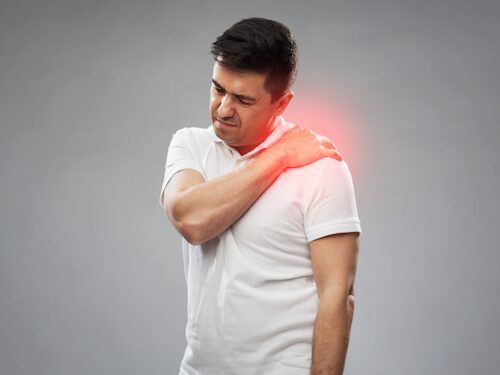
Frozen shoulder is a condition marked by stiffness, pain, and progressive loss of movement in the shoulder joint. Medically referred to as adhesive capsulitis, it occurs when the capsule of connective tissue surrounding the shoulder joint becomes inflamed and thickened. This inflammation leads to tightening and adhesions that severely limit mobility.
Causes and Risk Factors
While the exact cause isn’t always clear, several contributing factors are commonly seen:
- Prolonged immobility after surgery or injury
- Systemic conditions such as diabetes or thyroid dysfunction
- Hormonal shifts, particularly in women aged 40–70
- Shoulder trauma or overuse injuries
- Postural imbalance or chronic inflammation
The shoulder joint—one of the most mobile and complex in the body—is particularly sensitive to changes in blood flow, inflammation, and connective tissue balance. When the delicate interplay between these systems breaks down, the result can be a shoulder that progressively “freezes.”
Recognising the Three Stages of Frozen Shoulder
Understanding the three phases of frozen shoulder is essential for both accurate diagnosis and effective treatment planning. Each stage presents its own set of challenges and requires a different therapeutic approach.
1. Freezing Stage
Duration: 2 to 9 months
Symptoms:
- Gradual onset of pain, often worse at night
- Increasing stiffness with movement
- Pain may radiate from the shoulder down to the elbow or upper arm
- Difficulty with everyday tasks (reaching, dressing, lifting)
This stage is driven largely by inflammatory processes and changes in cytokine activity (a type of protein in cells that effect the immune system), causing pain and protective muscle guarding.
2. Frozen Stage
Duration: 4 to 12 months
Symptoms:
- Pain may lessen, but stiffness becomes severe
- Marked restriction in active and passive range of motion
- Difficulty performing overhead or behind-the-back movements
- Compensatory movement from the spine or scapula
While the inflammation may subside somewhat, thickening of the capsule limits motion. The joint often feels locked, and muscles surrounding it may weaken from disuse.
3. Thawing Stage
Duration: 5 to 26 months
Symptoms:
- Gradual improvement in range of motion
- Minimal pain, especially at rest
- Daily function slowly returns
With proper guidance and consistent care, this phase brings a return of mobility. Cellular repair processes accelerate, and homeostasis in the joint structures begins to re-establish.
Diagnosing Frozen Shoulder
Accurate diagnosis is key to differentiating frozen shoulder from other causes of shoulder pain, such as rotator cuff injuries, arthritis, or nerve impingement.
Clinical Assessment
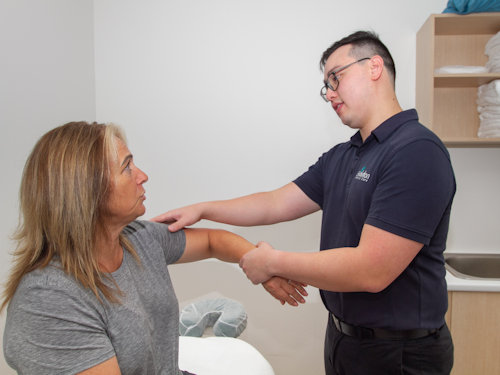
Diagnosis often begins with a detailed medical history and physical examination. A practitioner will evaluate both active and passive range of motion—the ability to move your arm independently versus how far the joint moves when assisted.
Frozen shoulder typically restricts both types of movement, which helps distinguish it from tendon or muscle-related conditions.
Imaging
To rule out other structural causes of shoulder pain, your practitioner may recommend:
- X-rays to check for arthritis or bone abnormalities
- Ultrasound to assess soft tissue integrity
- MRI to evaluate inflammation or scar tissue
These imaging tools do not diagnose frozen shoulder directly but help exclude other conditions. Once confirmed, the focus shifts from identification to strategic, phase-specific management.
Why Early Intervention Matters
Many patients delay treatment, hoping the pain will fade on its own. Unfortunately, without intervention, the shoulder can become progressively more restricted—potentially lasting for 12 to 36 months. The earlier you act, the better the outcome.
Preventing Structural and Neurological Changes
Chronic inflammation and immobility can lead to:
- Fibrosis – thickening and scarring of the connective tissue of the joint capsule
- Muscle atrophy due to disuse
- Compensatory strain on the neck, back, and opposite shoulder
Avoiding a Vicious Cycle
Pain leads to less movement, which fuels more stiffness and discomfort. This cycle can impair not just physical function but also emotional wellbeing. Many patients report feelings of frustration, helplessness, and social withdrawal.
Early engagement with natural, research-backed interventions helps break this cycle—supporting the body’s innate healing processes while preserving mobility and quality of life.
Research-Backed Natural Therapies at Evolution Medical Care
At Evolution Medical Care, we offer a personalised, integrated approach to managing frozen shoulder. Our treatments are guided by both modern research and centuries of clinical tradition. Each therapy is evidence-based, safe, and tailored to the stage of your condition.
Acupuncture: Resetting the Body’s Pain Response
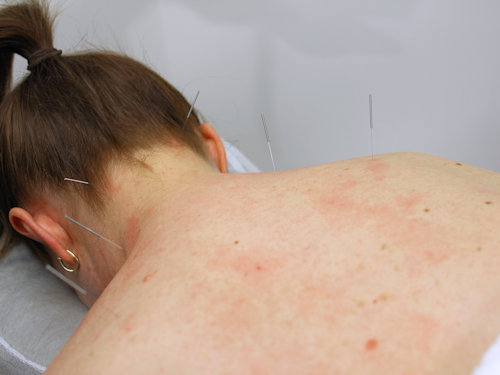
Acupuncture involves the precise insertion of fine needles into specific points to:
- Stimulate the release of endorphins and opioid-like compounds
- Modulate inflammation via changes in cytokine activity
- Improve blood flow to the joint capsule and surrounding tissues
Research shows that Acupuncture can significantly reduce pain and improve range of motion in frozen shoulder patients—especially when used early and consistently.
Herbal Medicine: Supporting Recovery from Within
Our herbal prescriptions are designed to:
- Reduce systemic and local inflammation
- Enhance circulation and tissue healing
- Support the immune system and hormonal balance
These formulas are tailored to your overall health and symptoms, drawing on well-researched plant compounds that interact with the body’s healing pathways.
Remedial Massage & Heat Therapy: Encouraging Vasodilation and Relaxation
Targeted soft tissue techniques help reduce tension in overcompensating muscles and stimulate vasodilation, improving nutrient delivery to the affected area.
Heat therapy further enhances this effect by increasing circulation and reducing pain signals carried by substance P—a key neurochemical involved in nociception (pain perception).
Nutritional Support: Fuelling the Healing Process
Nutrients such as:
- Magnesium (for muscle relaxation and nerve health)
- Vitamin B6 and B12 (to support nerve regeneration)
- Omega-3 fatty acids (for anti-inflammatory action)
- Vitamin D (critical for calcium regulation and immune balance)
These compounds help regulate inflammatory mediators and assist with repair at a cellular level, particularly within connective tissues and neuromuscular pathways.
Rehabilitative Exercise and Shoulder Mobilisation
Movement is medicine—especially for frozen shoulder. While rest may feel instinctive during the painful stages, controlled mobilisation is essential to prevent long-term restriction and restore function.
At Evolution Medical Care, we guide patients through safe, progressive exercises tailored to their stage of recovery and pain threshold.
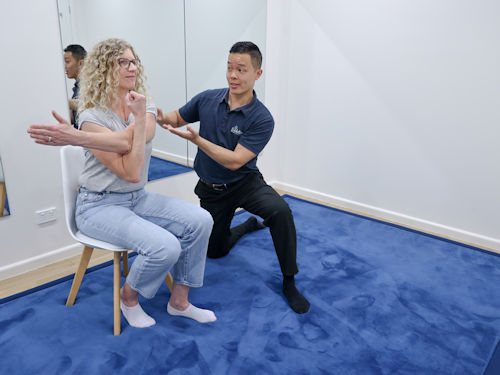
Key Exercises We May Prescribe
(Performed under supervision or as part of a home-care routine)
- Pendulum Swings:
Lean forward, letting the affected arm dangle, and gently swing in small circles. This encourages passive movement without strain. - Wall Walks:
Stand facing a wall and slowly walk your fingers up as high as possible, then back down. Over time, this improves overhead reach. - Passive Overhead Stretch:
Lying on your back, use your non-affected arm to slowly raise the painful arm overhead, stopping at a comfortable limit. - Cross-Body Arm Stretch:
Gently pull the affected arm across your chest to stretch the posterior capsule and restore internal rotation.
All exercises are prescribed with careful attention to biomechanics, pain limits, and ensuring no activation of compensatory muscle patterns. These movements help re-establish homeostasis and improve the shoulder’s adaptive function.
Adjunct Therapies and When to Escalate Care
In most cases, natural therapies and exercise are enough to manage frozen shoulder effectively. However, certain adjunct treatments may be recommended when recovery plateaus.
Additional Supportive Measures:
- Heat / Cold Therapy
– Heat promotes vasodilation and soft tissue flexibility
– Cold reduces inflammatory cytokines and numbs pain - Joint Mobilisation Techniques
Gentle manual therapy may improve capsular flexibility, especially in the frozen phase. - Cupping Therapy
In selected cases, cupping may help by increasing microcirculation and reducing muscular tension. - Electroacupuncture or TENS
These methods stimulate nerve pathways and may increase levels of endorphins and other pain-modulating neurotransmitters like dopamine and serotonin.
When Is Escalation Appropriate?
If pain is unmanageable or there is no progress after 3–6 months of therapy, referral for corticosteroid injection, hydrodilatation, or surgical opinion may be warranted. However, most patients respond well to non-invasive treatment when started early and followed consistently.
Long-Term Recovery Outlook
Recovery from frozen shoulder is not linear—but it is achievable. With the right care, most people regain full or near-full function without surgery.
What to Expect Over Time
- 1 to 3 years is the typical recovery timeline
- Earlier intervention can significantly reduce this duration
- Ongoing movement, enhanced nutrition, and stress reduction are key to success
As healing progresses, we often see improvements not only in shoulder range but in overall well-being—better posture, less stress, and improved sleep. This is thanks to systemic regulation of cortisol levels, enhanced circulation, and reduced pain perception via the body’s opioid receptors and GABAergic pathways.
Final Thoughts
Frozen shoulder can be isolating—both physically and emotionally. It restricts your independence, your ability to enjoy everyday activities, and your confidence in your own body.
At Evolution Medical Care, we understand that every shoulder tells a story. That’s why we combine research-backed therapies with traditional wisdom, using modalities like Acupuncture, Herbal Medicine, and targeted exercise to support your recovery at every stage.
Our approach is designed not just to relieve pain, but to restore mobility, build resilience, and help you reconnect with the activities that make life enjoyable.
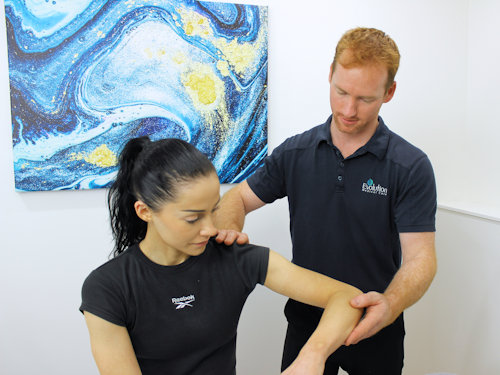
Is frozen shoulder holding you back?
Book an appointment with Evolution Medical Care and discover how our research-backed natural therapies can help you move freely again—without surgery or long-term medication.
Book online or call (02) 4709 6727 today—we look forward to discussing how we can help in your situation.